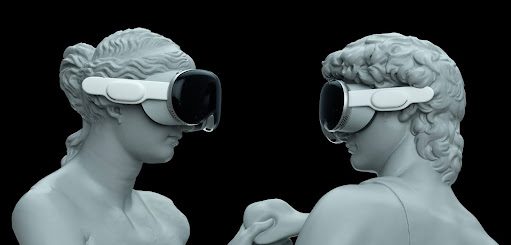
Stephen Hawking once warned, “The development of full artificial intelligence could spell the end of the human race.”
Artificial intelligence is slowly taking over the world, and with that, the writing industry. Of that much, we’re aware, and —Stephen Hawking certainly was. However, it seems we need a little help discerning the line between artificial intelligence and artistry. So where is that line? Where is AI encroaching upon the artistic talent of people as a whole? When do we truly get a glimpse of what our world looks like with AI taking over?
Well, I’m here to tell you exactly where that line should be drawn, and I can give you that glimpse right now.
Picture this. Give it… Eight to ten years in the future.
Major decreases in human creativity and brain activity.
Desecration of our society and planet as a whole.
Entire ecosystems, overcome with grey and ruin.
A sickening lack of water.
And the loss of any and all personality our world and its people have managed to hold onto.
That’s the harsh and stringent reality. If artificial intelligence continues on its current trajectory, it will completely deplete the Earth’s resources before you can even think about what may have happened. There are so many films and television shows all about the end of the world. Plenty of which include the overtaking of robots. In The 100, humans led the earth to the very brink of extinction; they left it to simmer in radiation, all because they couldn’t take care of it properly.
In The Lorax, the Oncler tore down each and every tree until he was satisfied with his own product. In the end, all of the animals, including the Lorax, left in a sorrowful search for the land they once knew, leaving the Onceler alone with the mess that he created.
The prolific use of AI in the film, journalism, and music industries will inevitably lead to the rapid deterioration of not just our planet but also our creativity. When we open any AI software in an attempt to finish an assignment, write us a script, come up with book or article titles, or sing us a brand new, never-heard-before song, it defeats the entire purpose of these industries. The entire point of writing an article, of vocalizing your own words into a song, or writing the script for your movie is that you utilize your own brain in order to do it. The idea is that you think of things and get excited to write them yourself! It’s not about using some robot to write it for you. It takes away the pride, the integrity, and the hopefulness that come with finishing one of these projects.
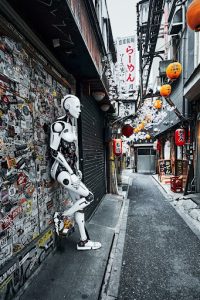
I spoke to my dear friend and avid media consumer, Lena Jones, on that very same topic, and when asked where she would draw the line, Lena responded with a quote from Oxford Language. She said, “Art – the expression or application of human creative skill and imagination, typically in a visual form such as painting or sculpture, producing works to be appreciated primarily for their beauty or emotional power.” Then, “That is the definition of art from Oxford Language. Notice how it says ‘human.’ I think that artistry, or art, is anything that a person makes using their own thoughts and creativity. Some people have argued that for AI to create something, it needs a person to tell it what to do, but the AI is still the one doing the creating. I think the line is drawn as soon as you open any AI software. The moment you let something non-human alter your own work, no matter how detrimental those changes are, it is no longer art. I will never consider AI a form of art, and neither should you.” I couldn’t have said it better myself. Being creative can always be a bit difficult, but that’s the point, isn’t it? How are we supposed to learn if we let generative AI do everything for us?
There is a line between artistry and AI, and that line should be drawn in bright red ink with a neon sign right beside it… While occasionally utilizing generative AI as a simple tool may not seem so terrible, it is destroying both our minds and our planet as we speak.
“The proliferating data centres that house AI servers produce electronic waste. They are large consumers of water, which is becoming scarce in many places. They rely on critical minerals and rare elements, which are often mined unsustainably. And they use massive amounts of electricity, spurring the emission of planet-warming greenhouse gases,” says the UN Environment Programme.
Relying on artificial intelligence to do everything for you is bad in itself because it’s stripping you of your humanity, creativity, and brain capacity, but another major issue that greatly affects our environment is the desecration of the very world we live in.
AI is everywhere. No, I’m not kidding, it is. It’s used in schools, work fields, everyday life, and absolutely all over social media. In fact, a couple of months ago, there was a trending clip on both Instagram and TikTok, both of which included a group of rabbits bouncing on a trampoline. Everyone who watched it thought the bunnies were the cutest thing they’d ever seen. I mean, come on? A bunch of baby rabbits jumping on a trampoline? Who wouldn’t find that adorable?
It wasn’t real.
That video, the one with the bunnies, was created with AI, much like millions of other videos online. Artificial intelligence is getting so popular that it’s becoming difficult to discern what’s fabricated from what’s real. It got so popular that someone by the name Oliver Richman wrote a song about it. With lyrics like “There were bunnies that were jumping on a trampoline//And I just learned that they weren’t real//If a bot can inhabit//An unknowing rabbit//It might manufacture the way you made me feel//How do I know that the sky’s really sunny//Sometimes it feels like your love is as real as an unknowing bunny” and “Forget how to try//Forget how the rain used to dance with the sky//Till you no longer care how the hair of a hare used to feel//Cause your mind’s made of lead and your heart’s made of steel” This song has resonated with hundreds of people who feel like artificial intelligence is stripping others of their own thoughts and feelings, myself included. After all, if someone can generate a four-second video of rabbits jumping on a trampoline and manage to fool almost the entire world, what else could they possibly do?
“AI tools are being used maliciously to generate convincing but false content, including articles, images, audio clips, and deepfake videos. This makes it harder for the public to distinguish fact from fiction. The rapid spread of such content overwhelms newsrooms, which lack the capacity to verify every claim. This challenge, in turn, fuels further distrust in the media,” says Unric.org regarding the 2024 discovery that “a journalist from France was targeted with a deepfake that manipulated both his voice and article headline. The altered content distorted his reporting on President Emmanuel Macron’s visit to Ukraine, spreading disinformation and undermining his credibility. Such tactics illustrate how even seasoned professionals can fall victim to AI-driven deception.”
Given all of the evidence linking artificial intelligence to the profanation of our physical plane, it seems not just dishonorable but also ignominious and corrupt that we continue to let these things encroach on something as fascinating as artistry. Journalists, filmmakers, novelists, and physical artists alike should not be relying on the consumption of generative AI and its use during their building process. Arts such as these should be created and built by you. After all, that is why we’re here, isn’t it? Without writing, or science, or paintings, we wouldn’t be where we are now. All of these things, this creativity shapes, not just us as people, but humankind as a whole.
Utilizing artificial intelligence during the process of composing art strips the artist of their creativity; no matter how hard it can try, AI cannot recreate art. It cannot replicate the emotional connections that come from being human. It’s been proven that generative artificial intelligence has the most trouble generating human hands, and this may seem completely off topic and not at all related to the subject at hand, but it is. Generative AI is an issue, and it’s taking over our world today. It’s writing for us, doing students’ schoolwork, it’s creating art. The one thing that it can’t seem to replicate consummately is a human hand.
That same human hand that was the very first form of art. The same human hand that created art in the first place. There’s something so poetic about that, I think. About generative AI being unable to recreate our purest form of self. It’s overtaking our schools, our jobs, our screens. So don’t let it take away your personality. Artificial intelligence has a prolific list of reasons why it shouldn’t exist; it is a major issue that we are facing today, and if nothing is done about it, these “gilmpses” will become our reality. And so, just like the Onceler left these words to Ted, I’ll leave them to you. “Unless someone like you cares a whole awful lot, nothing is going to get better. It’s not.”