
Have you ever wondered why we get scared? Why we enjoy fear? Is it the adrenaline? That feeling we get when we’re on a roller coaster and that gargantuan drop is coming up. Or when we’re watching a thriller and our favorite character is about to do something incredibly stupid that will inevitably lead to their untimely demise. You cannot tell me that it’s never even crossed your mind why we are so often bewildered by the things that lurk beyond our knowledge.
Well, contradicting the popular TikTok fad, the white rabbit and his “All roads lead to Rome” motto— this time, the road leads to psychology.
Let me elaborate; when we get scared, our brains release adrenaline, a stress hormone that excites the body. Our phobias have both psychological and physiological effects. Thus, the reason our hearts begin to race and our hands get all clammy when we’re watching horror movies or experiencing something of great terror. Our senses become heightened as the epinephrine (another word for adrenaline) courses quickly through our veins. It’s… unique. It’s memorable, and that’s why we so often seek it out. This is where the psychological effects come into play. When we’re scared, we often get all caught up in our minds about it – we think that we see or hear things that aren’t really there. We become paranoid.
I, myself, have experienced this numerous times; I find that whenever I watch a horror movie, at least the ones that rattle me, I always end up feeling rather paranoid afterward. I know that everything from the film isn’t real, it’s a fantasy, but that doesn’t stop my brain from thinking that a giant animatronic is going to get me whilst I’m blissfully unconscious. But that only makes it more fun, doesn’t it? It’s the unpredictability of it all. That’s why so many people love haunted attractions—it feels real, and that’s the point. Even though it may feel like you’re going to die, you’re not… And that’s fun. You can be scared and hit that much-needed adrenaline rush, but when it truly comes down to it? You’re safe.
When asked why certain folk tend to lean toward haunted attractions, whilst others prefer to stay on the sidelines, Mrs. Rachel Estes, the Mountain Ridge High School psychology teacher, says “There are quite a few factors that contribute to seeking out a scary experience— When we’re scared, we get a rush of adrenaline— which is a part of our fight or flight responses. Adrenaline gives our body that much-needed boost of energy to run or to fight for our lives. Once that fear has passed, we tend to get a rush of euphoria. Typically, those seeking out these terrifying adventures are looking more for the feeling they get after.”
On the topic of fear, the American Brain Foundation says “Assuming that a threat is not real, feeling frightened can have a positive effect, and knowing that you’re safe can cause a feeling of euphoria. That’s because your brain triggers a chemical rush, a state of high arousal much like positive excitement, but your awareness of your safety prevents you from experiencing the effects of stress. And while adrenaline is widely acknowledged as a driver of our enjoyment of fear, a 2017 study by researchers at the University of Michigan determined that dopamine also has a role, in that it triggers feelings of pleasure as a reward for surviving a frightening experience,”
We get scared because our everyday life doesn’t give us that rush of euphoria— We need that ephemeral adrenaline course, the one that isn’t real. The one that lasts only mere moments. We want to be afraid, but at the same time, we need to know that we’re safe.
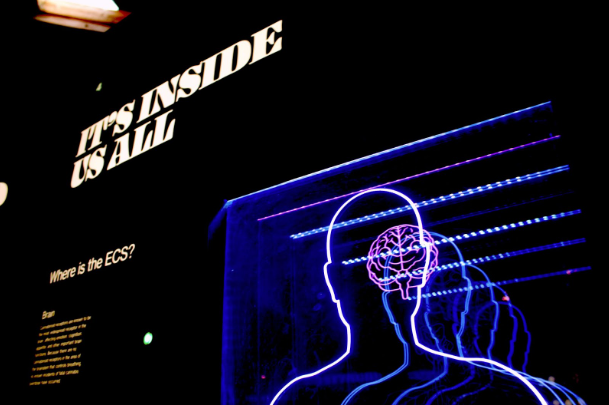
The Guardian says, “The amygdala, an almond-shaped bundle of neurons deep in the centre of the brain, controls the fear response. In a fearful situation, the amygdala stimulates the hypothalamus, which activates two systems in the body – the sympathetic nervous system and the adrenal cortical system – causing a flash flood of hormones and triggering the fight-or-flight response.”
While the science of this topic is important, it’s the perspective that really matters. Some folks like cuddling up in a rainy window to read beside a dimly lit wood-burning fire, and some like having the opportunity to scream. It’s been proven that science and adrenaline do play a rather large role in the fear factor, but the part that’s most often forgotten about, the most important part, is human perspective and the psychological warfare that battles in its wake.